Read here about what goes into the process for designing and constructing a ZooFab habitat
More than just Zoo design
We’re not just architects or traditional contractors. We are passionate creators dedicated to designing innovative and functional enclosures that prioritize the well-being of animals. Our work is guided by a deep commitment to animal welfare and conservation, ensuring that every project we undertake not only meets the highest design standards but also supports the natural behaviours, health, and habitats of the animals
So what goes into designing an animal habitat?
There are many different aspects that we think about when designing and enclosure and we have to balance all the different parts to work out what’s best for the animal the guests/students and staff as well as the overall mission of the animal collection. All of our zoo enclosures are designed to balance these aspects as well as many more components that go into our zoo design. It must provide enough space, environmental enrichment, shelter, and climate control to meet each species’ biological and behavioural needs, while incorporating strong barriers, emergency access, and secure keeper areas. Naturalistic features like vegetation, terrain, and water elements help replicate native habitats, and social or breeding requirements shape the habitat layout. Enclosures also include veterinary spaces, feeding systems, and maintenance features, alongside viewing areas and educational signage for the public. Overall, a well-designed enclosure supports animal health, conservation goals, and an engaging, safe experience for visitors.
-
Animal Welfare
Our teams no.1 priority is animal welfare all of our designs will put this first and when it comes to construction it is not forgotten and is the staple of what we do throughout the process.
Overall animal welfare must be the top priority when designing a zoo enclosure because the primary goal of any modern zoo is to provide animals with a safe, healthy, and stimulating environment that meets their physical, psychological, and social needs. Enclosures should enable animals to express natural behaviours, maintain good health, and experience choice and control over their surroundings, which reduces stress and prevents abnormal behaviours. Prioritising welfare influences every aspect of design—from space, enrichment, and naturalistic features to life support systems and staff access—ensuring that animals can thrive rather than merely survive. When welfare is central, enclosures support longevity, reproductive success, and mental stimulation, while also reflecting ethical and professional standards, ultimately creating environments that benefit both animals and the educational or conservation missions of the zoo.
-
Guest Experience
A well-designed zoo enclosure creates an excellent guest experience by combining strong animal welfare, intuitive viewing, and immersive environmental storytelling. The habitat should reflect the species’ natural environment through authentic materials, microhabitats, natural substrates, and built-in enrichment that encourages natural behaviors, while retreat spaces ensure animals can choose privacy. For guests, clear multi-angle viewing, wide accessible paths, shade, and subtle theming make the experience comfortable and engaging. Environmental storytelling is woven into the enclosure through pre-viewing cues that set the scene, intentional “reveal” moments where guests first see the animal, and post-viewing spaces for reflection and conservation messaging. The enclosure itself becomes a narrative tool using realistic habitat features, artifacts, interpretive signage, and interactive elements to convey the animal’s ecological role and conservation challenges, creating emotional connections through awe, curiosity, and empathy. Together, thoughtful design, behavior-centric habitat planning, and cohesive storytelling transform a single enclosure into a meaningful, memorable, and educational experience.
-
Life support Systems
As a team who have all kept animals for over a decade we all strive for providing the best systems and conditions for animals to live in and keep them healthy.
Life support systems, including water filtration, heating, and lighting, are essential in animal enclosures because they maintain the environmental conditions necessary for health, comfort, and natural behaviour. Water filters ensure clean, safe water for drinking, swimming, or aquatic habitats, preventing disease and supporting hydration. Heating systems regulate temperature, providing warmth for species that require specific thermal ranges, while lighting—both naturalistic and artificial—supports circadian rhythms, activity patterns, and in some cases, vitamin D synthesis. Together, these systems create a stable, controlled environment that allows animals to thrive, reduces stress from unsuitable conditions, and enables them to express natural behaviours safely and consistently, forming a foundation for effective husbandry and overall welfare.
-
Animal Enrichment
Enrichment is essential in any animal enclosure because it supports natural behaviours, reduces stress, and promotes both physical and mental wellbeing. Built-in enrichment, such as climbing frames, platforms, tunnels, varied substrates, and water features, forms the structural foundation of an enclosure and allows animals to climb, hide, rest, explore, and use the space in species-appropriate ways. Additional enrichment—like foraging puzzles, scent trails, toys, browse, or training activities—adds variety and novelty, preventing boredom and encouraging mental stimulation and problem-solving. Together, these two types of enrichment create a dynamic, engaging environment that gives animals choice, agency, and opportunities to stay active and healthy, ultimately improving overall welfare.
-
Natural Environments
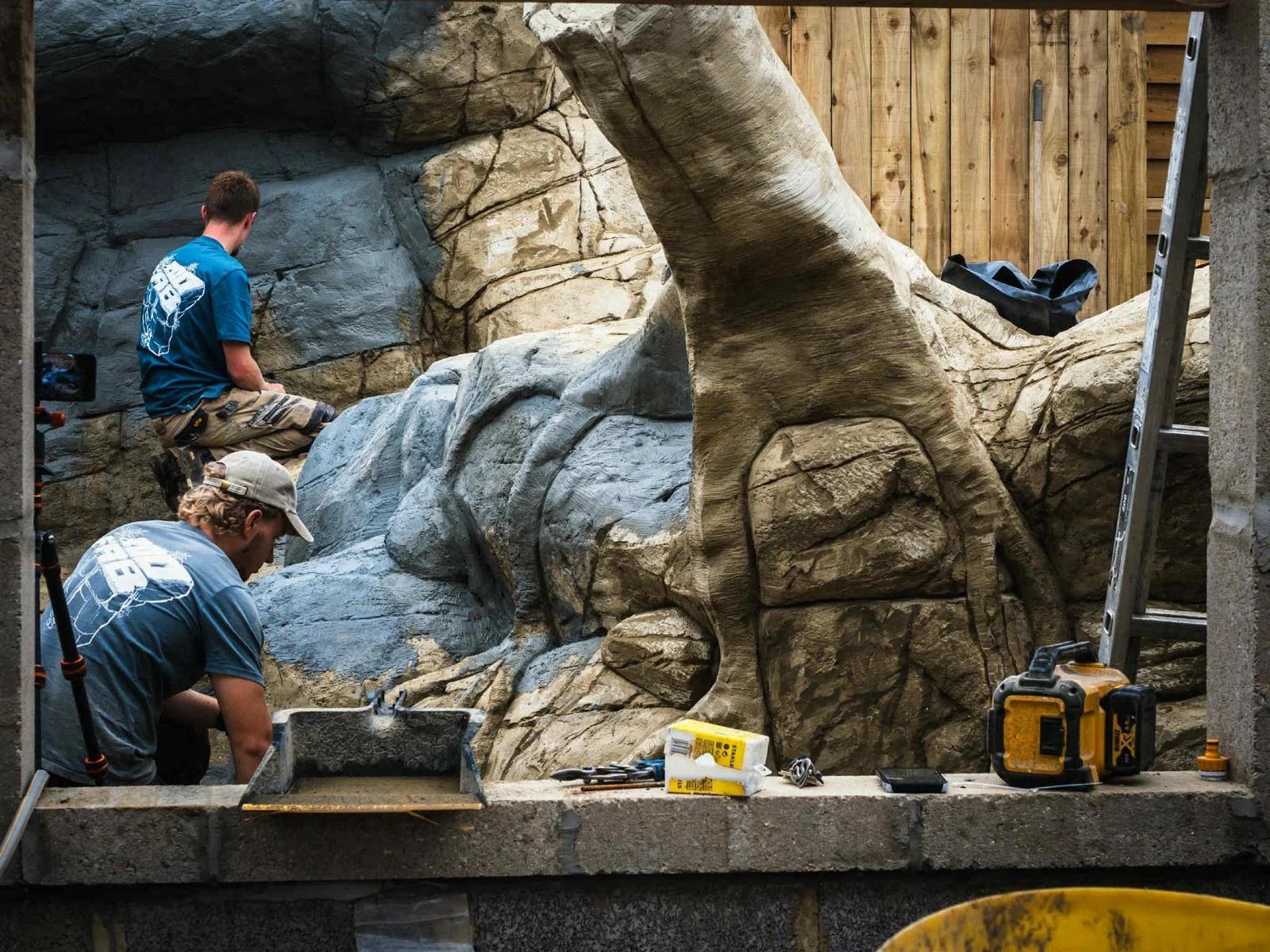
Creating naturalistic environments using elements like fake rockwork, landscaping, and planting is crucial because it provides animals with surroundings that mimic their natural habitats, enhancing both comfort and behavioural expression. Well-designed rockwork and terrain variations offer climbing, hiding, and vantage points that promote exploration and security, while vegetation—real or artificial—adds visual complexity, shade, shelter, and opportunities for foraging or scent-marking. These naturalistic features reduce stress by giving animals safe retreat spaces and a sense of control over their environment, and they also encourage species-appropriate behaviours such as climbing, digging, or navigating uneven terrain. Additionally, immersive landscaping improves enclosure aesthetics and creates a more engaging, educational experience for visitors, while maintaining durability and hygiene standards through the use of artificial components. Together, these elements create a functional, stimulating, and welfare-focused habitat.
-
Staff Usage
All of our staff have been within the animal industry for multiple years so we understand the importance of making zoo enclosures work not just for the animals but also the staff and finding the right balance is crucial.
Designing a zoo enclosure around staff usage is critically important because it ensures that animal care, maintenance, and safety procedures can be carried out efficiently, effectively, and with minimal stress to both animals and staff. Thoughtful staff-focused design includes secure access points, lockable gates, service paths, and observation areas that allow keepers to feed, clean, and monitor animals safely without unnecessary disturbance. It also facilitates the use of equipment, life support system maintenance, and veterinary interventions, reducing risk of injury or escape. By prioritizing workflow, visibility, and ergonomics, enclosures can balance the needs of animals for privacy and natural behaviour with the practical requirements of daily husbandry, making the environment safer, more manageable, and better suited to long-term welfare.